
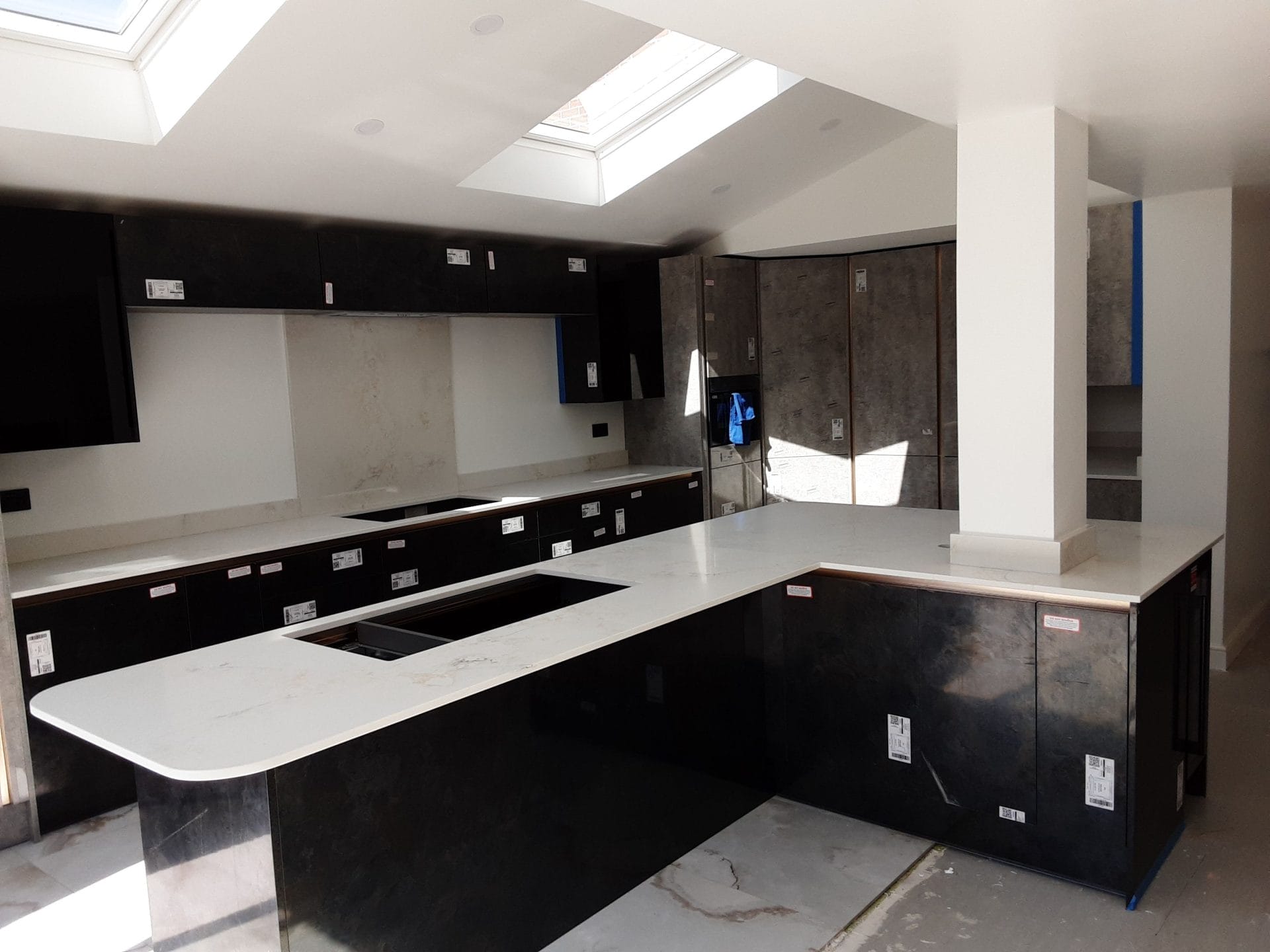
Marble has been having a moment for a while now. Walk through any high-end kitchen showroom, and you’ll see Calacatta islands, Carrara splashbacks, and Statuario samples running down every display. Instagram kitchens are full of it. Interior magazines lean on it constantly. It’s the surface that says “I spent money here.”
The catch, and there is one, is that marble is a lot more demanding than the photos let on. It stains, etches, scratches, and doesn’t forgive the kind of mess a busy kitchen generates. Granite, the other classic natural stone option, does almost none of that. So if you’re weighing the two up for a real working kitchen, the decision has less to do with how they look in a sample and more to do with what you’re willing to live with day to day.
How they're made
Both materials start in the ground, but they form in completely different ways.
Marble started life as limestone. Heat and pressure, applied over geological time, recrystallised it into the veined stone we recognise. That metamorphic process is what gave it the flowing, painterly quality in the pattern. It’s also what left the material soft and chemically reactive, which matters more than most buyers realise.
Granite had a rougher upbringing. Molten rock cooled slowly deep underground, crystallising into something dense and hard. The result is a surface that shrugs off almost everything a working kitchen throws at it.
That single difference, metamorphic versus igneous, shapes pretty much everything else about how the two materials perform.
Appearance
This is usually what gets people in the door.
Marble has veining. Long, flowing lines of grey, gold, or brown run through a typically white or cream background. The three most familiar types are Carrara (soft grey veining on white, relatively affordable), Calacatta (bolder, more dramatic veining on brighter white), and Statuario (the whitest and most expensive, with crisp, defined veins). No engineered product has fully matched the depth and movement of a good Calacatta slab. The veining isn’t a pattern printed on the top; it runs all the way through the stone.
Granite has a denser, busier pattern. Flecks, specks, and colour shifts move through the slab rather than veining across it. Colour range is wide: black, green, red, blue, brown, grey, and everything in between. Some granites are genuinely striking in their own right, but there isn’t a granite that looks like Calacatta, and no amount of careful selection changes that.
If you want classic, luxurious veining, marble. If you want something with more variety or real colour, granite.
Heat Resistance
Both materials handle heat well, but marble does it slightly better.
Marble stays noticeably cooler than room temperature, which is why pastry chefs have used it for centuries. If you bake seriously, even a small section of marble somewhere in the kitchen is a working advantage, not just a style choice. A hot pan placed briefly on either stone won’t do damage, so neither material will fail you in normal cooking.
Granite handles heat fine, but doesn’t have that cool-to-touch quality.
This is one of the few categories where the two are on roughly level ground.

Stains and etching
This is where marble and granite part ways, and it’s the single most important section in the comparison.
Marble etches. Any acid that sits on the surface for more than a few minutes leaves a dull, whitish mark where the stone has been chemically eaten. Lemon juice does it. Vinegar does it. Red wine, orange juice, tomato sauce, fizzy drinks, and even some “natural” cleaning products. A squeeze of lime left over from a Friday night cocktail will leave its signature behind by morning.
And sealing doesn’t stop it. This is the misconception that catches most buyers out. Sealing prevents staining, which is liquid soaking into the stone, but etching is physical damage to the surface itself. A freshly sealed, brand-new slab will still etch the first time lemon juice touches it.
Granite is much easier here. It’s acid-resistant enough that everyday spills leave no mark. They still want cleaning up, but they won’t damage the surface.
There are ways to live with marble’s etching. Honed marble, which has a matte finish rather than a polished gloss, hides etching far better because the dull mark blends into an already-dull surface. Many owners also come to love the patina marble develops over the years. But if the thought of a dull ring on pristine white stone would bother you every time you saw it, that’s important to know up front.
Durability
Granite is hard. It sits at 6 to 7 on the Mohs scale, which means knives, rough pans, and everyday kitchen wear don’t leave marks.
Marble is softer, at 3 to 4 on the same scale. Knives, abrasive pan bases, and even some cleaning pads leave fine scratches over time. This shows up most on polished marble, where scratches catch the light, and is much less visible on honed.
For any kitchen that sees heavy use, granite is the more durable material by a clear margin.
Maintenance
Both need sealing, but the effort involved is very different.
Granite gets sealed on installation and topped up every one to three years. Daily care is straightforward: warm water, mild soap, spills cleaned when they happen. That’s about it.
Marble is more demanding. Annual sealing is typical, and you’ll want pH-neutral cleaning products rather than the standard sprays that often contain acids. Citrus, vinegar, and wine need to come off the surface quickly, and certain cleaners will damage marble as fast as food acids will, so you have to be a bit careful about what you reach for.
If low maintenance matters, granite is the clear winner. If you’re happy to take more care, marble is liveable.
Cost
Prices for both materials range widely.
Entry-level Carrara marble and standard granite often sit in similar territory. Granite pricing can dip lower with common domestic varieties and climb high with rarer imported slabs. Marble pricing climbs fastest at the premium end: Calacatta and Statuario can cost significantly more than most granite, sometimes several times over.
As always with natural stone, the specific slab matters more than the category. Thickness, edge profile, and total square metres all affect the final figure, so a quote on a specific piece will always be more useful than any general range.

Granite vs Marble Before you buy
A few things worth knowing before you commit either way.
See the actual slab. Samples don’t show veining at scale, and with marble especially, the same stone name can hide dramatic variation between slabs. A Calacatta with subtle grey veining and a Calacatta with bold gold veining are both called Calacatta. You want to know which one you’re getting.
Ask about finish. Polished is what most people picture when they think of marble, but honed is the more practical choice for a working kitchen. It hides etching, fingerprints, and water marks, and reads as softer and less formal. For anything in daily use, it’s usually the right call.
Consider using both. A marble island paired with granite perimeter worktops gives you the visual statement without asking every surface to survive a school night. A marble pastry section set into a larger granite run lets you bake on cool stone without worrying about what happens when a pan of pasta sauce gets dragged across it. Any decent fabricator will have done layouts like this plenty of times.
Think about bathrooms too. Much less acid exposure around a basin or shower strips out most of the maintenance argument. If you love marble but worry about a kitchen installation, a vanity is a far easier place to put it.
Plan the joins. Marble’s veining is directional, which makes seams more visible than they are on granite. A good fabricator will book-match slabs, laying mirror images side by side to create a continuous pattern. This is one of marble’s most dramatic effects and worth asking about on any run longer than a single slab.
Granite or Marble: Which should you choose?
Picking which material is “better” is difficult when so much depends on lifestyle.
Granite asks almost nothing of you and gives back a durable, low-hassle worktop that will look the same in a decade as it does today. Marble asks for more patience, more care, and a willingness to accept a surface that changes over time, in exchange for a look nothing else delivers.
Most kitchens will be better served by granite. Some kitchens are built around a marble moment, and for those, no substitute really works. If you’re not sure which category yours falls into, go and stand in front of full slabs of each in a showroom. It’s surprising how quickly that clarifies the question.


