
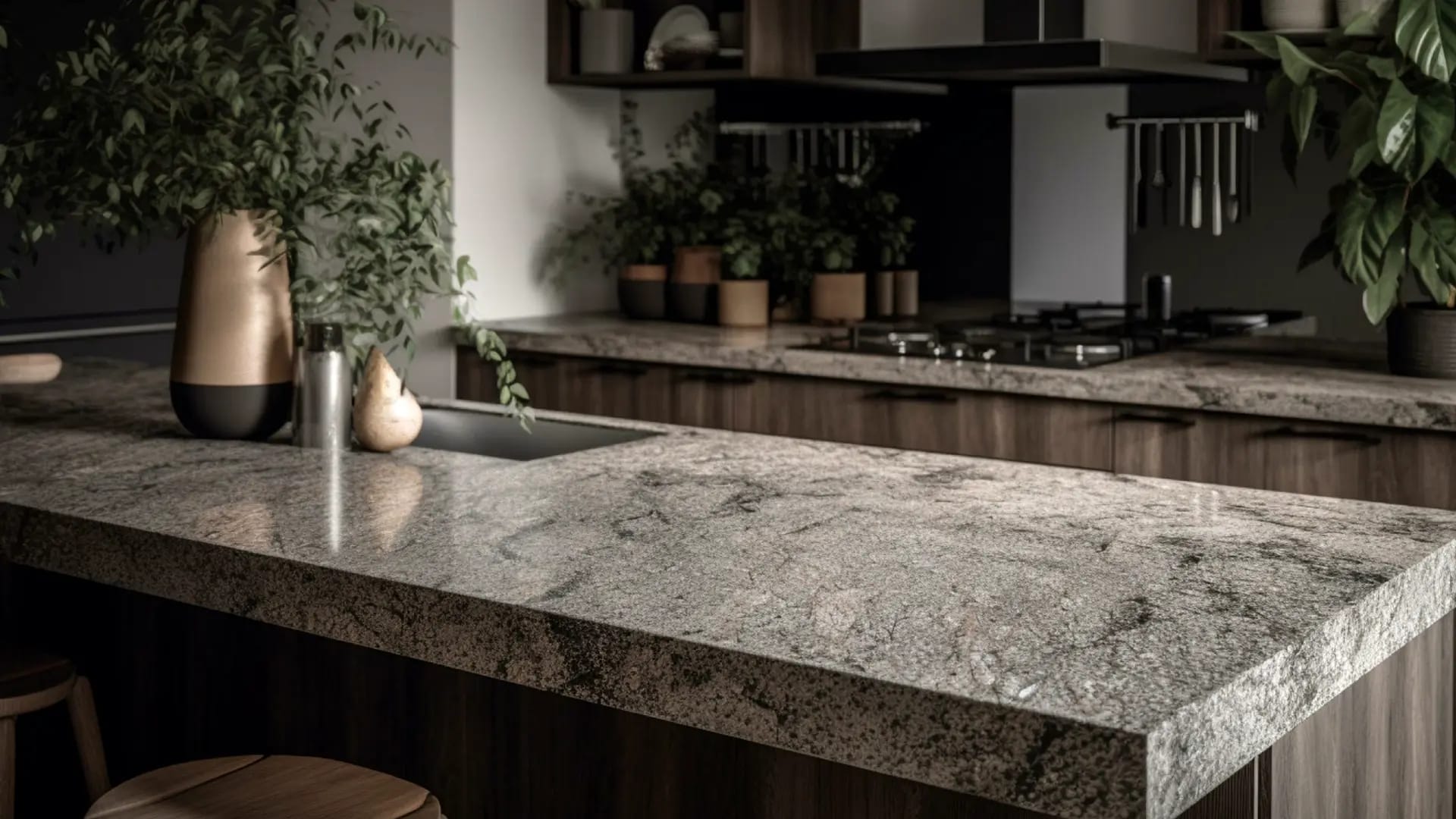
Quick answer: Quartz suits most UK kitchens because it’s lower maintenance and easier to plan around. Granite is the better call when you want every slab to feel one of a kind, when the worktop will take real heat, or when it’s going outdoors or under strong sunlight. Below is the honest comparison, plus the details that catch most buyers out at quoting stage.
Natural stone vs engineered surface
Granite is quarried. It’s cut from the ground in large blocks, sliced into slabs, and polished. The piece in your kitchen formed over millions of years and no one designed how it would look.
Quartz is engineered. Around 90 to 95% crushed natural quartz is mixed with resin and pigment, then pressed into slabs. That gives manufacturers control over colour, pattern and consistency that nature can’t.
Almost every other difference between the two materials follows from that one distinction.
Appearance and finish options
Granite has movement. Veins, flecks and colour shifts run through every slab in ways no two repeat. If you want a worktop that feels one of a kind, that’s the draw.
The trade-off is unpredictability. A small sample rarely tells you what the full slab will look like, so always view the actual slab before it’s cut. This matters more on larger kitchens, where any variation is visible across runs.
Granite also comes in three main finishes: polished is the standard high-gloss look, honed is matte and softer (often suited to farmhouse or traditional kitchens), and leathered sits between the two with a slight texture that hides fingerprints and water marks far better than polished.
For darker stones in particular, leathered is worth considering. Plenty of clients pick polished black granite from a sample, then live with smudges they didn’t expect.
Quartz is the opposite. It’s made in batches to spec, so the sample you pick and the slab you fit will match closely. The colour range is also wider, from solid whites and blacks through to concrete-effect greys and convincing marble look-alikes. Most brands offer polished and honed finishes, and some now produce textured options that mimic natural stone closely.
To break it down to its simplest, pick granite for character, quartz for predictability.
Heat Resistance
Granite has a clear edge here. It was formed under heat and pressure, and a hot pan straight off the hob won’t damage it.
Quartz is more sensitive. The resin that binds it starts to degrade at higher temperatures, and prolonged contact with very hot pans can cause discolouration or marking. Every quartz manufacturer recommends trivets, and that’s not optional advice. Thermal damage is rarely covered under warranty, and it shows up more often than buyers expect.
If you’re a heavy cook who pulls cast iron straight off the hob and onto the surface, factor that in.
Stains, sealing and cleaning
Quartz wins on day-to-day living. Being non-porous, it doesn’t absorb anything. Wine, oil, turmeric, coffee. None of it soaks in, and a damp cloth handles most spills. No sealing, no special products, no thinking about it.
Granite is slightly porous. It needs sealing on installation and resealing every one to three years depending on the stone and how hard it’s used. Miss that, and acidic or oily spills can leave marks that are difficult to shift.
The seal test is simple: drop water on the worktop. If it beads, you’re fine. If it soaks in, it’s time to reseal.
Neither material is hard to live with, but quartz is genuinely lower effort.
Durability and lifespan
Both will outlast the kitchen they’re fitted into. Chips and cracks from heavy impact are possible with either, but uncommon in normal use. Thirty-plus years is realistic for both with reasonable care.
One detail that catches people out: quartz shouldn’t be used outdoors or under strong direct sunlight. UV breaks down the resin and causes yellowing or fading. If you’re planning an outdoor kitchen, a conservatory island or a worktop under a large south-facing window, granite is the only one of the two we’d specify. (Porcelain is also worth considering for those settings, which is a separate conversation.)
Granite can be vulnerable to spills if the seal lapses. Acidic liquids like Lemon juice, wine and vinegar can etch into the surface and leave dark patches that are very difficult to get rid of. Stay on top of your sealing, and this is a non-issue, but something to be aware of when you’re choosing between the two.

Quartz vs Granite Cost
Upfront
Prices overlap heavily, though granite tends to run slightly higher on average. UK installed costs typically sit around £250 to £600 per square metre for quartz and £270 to £600 per square metre for granite, with rare granite slabs and premium quartz brands like Silestone, Caesarstone or Compac both pushing past £900 per square metre at the top end.
What actually drives cost more than the headline material: the specific slab or colour, the edge profile, the thickness (20mm vs 30mm), the total square metres, and cutout complexity (sinks, hobs, drainer grooves). A real quote on a real specification will tell you far more than any general price comparison.
Ongoing
Ongoing costs of Granite and Quartz worktops are something you’ll rarely see discussed in the showroom. But it is something to be aware of when making a purchase of this size.
Granite needs resealing every 12 to 18 months on average, sometimes longer depending on the stone. A DIY sealing kit costs around £45 to £50 and lasts several applications. If you’d rather have it done professionally as part of a deeper clean and polish, expect to pay a stone restoration specialist a few hundred pounds, depending on the size of the kitchen and the condition of the surface. Across a 30-year lifespan, that’s a real but modest running cost.
Quartz has effectively zero ongoing maintenance cost. No sealing, no specialist products, no annual job to remember. Over decades, that adds up.
Repair Costs
Both can be repaired. Chip repairs use colour-matched resin and typically cost around £60 to £150, depending on size, location and how visible the spot is. The interesting difference is how well the repair hides.
Granite repairs blend in well because the natural variation of the stone disguises the join. A small chip on a busy, patterned granite is often invisible once finished.
Quartz repairs are harder to hide. The surface is uniform by design, so any patched area can show against the surrounding pattern, particularly on plain colours and dark slabs. Skilled repair specialists can get close to invisible, but it’s a finer job.
The bigger long-term risk on quartz is damage that can’t be patched: significant heat marks, UV yellowing or large cracks usually mean replacing the affected section, which can run into four figures once you factor in template, fabrication and refit. Granite’s biggest equivalent risk is staining from a missed reseal, which a restoration specialist can usually polish out without replacing anything.
The rough rule:
- If you want lower running costs and don’t mind that big damage means replacement, go quartz.
- If you want a surface that’s easier to repair invisibly and you’re happy to spend an hour every year or two on sealing, go with granite.
Details That Can Affect Your Price
A few details affect both cost and the finished look more than most buyers expect, and they’re worth raising before you commit.
Edge profile. Straight or pencil-round edges are the cheapest and most common. Bevelled, bullnose and ogee edges cost more because they take longer to cut and polish. They also change the character of the worktop, particularly in traditional kitchens.
Thickness: 30mm is the UK standard and gives a substantial feel. 20mm is lighter and more contemporary, often paired with a built-up mitred edge to give the impression of a thicker slab. 30mm costs more but ages better, particularly in granite.
Sink choice. Both materials work with undermount sinks, but the cutout adds cost and affects templating. Belfast and butler sinks need particularly careful planning.
Joins. In larger kitchens you’ll need joins where slabs meet. These are far less visible in plain quartz than in heavily patterned granite, where matching the pattern across a seam is genuinely difficult. If your kitchen needs a join, pick your slab with that in mind.
Quartz vs Granite - which should you choose?
It comes down to what you want from the worktop.
Choose quartz if you want consistent colour and pattern with no surprises, the kitchen sees heavy daily use, and you’d rather not think about sealing, you’re matching a specific design palette, or the space is fully indoor with no significant direct sunlight.
Choose granite if you want the worktop to feel like genuine stone with its own character, the space is outdoor or sees strong sunlight, you cook heavily and want to put hot pans down without thinking, or you’re happy to view the full slab before it’s cut.
Both look and feel different in person from how they appear in samples or photos. Finish and edge profile change the result more than most websites let on. Before you commit either way, see full slabs in a showroom.
It comes down to what you want from the worktop.
Choose quartz if you want consistent colour and pattern with no surprises, the kitchen sees heavy daily use, and you’d rather not think about sealing, you’re matching a specific design palette, or the space is fully indoor with no significant direct sunlight.
Choose granite if you want the worktop to feel like genuine stone with its own character, the space is outdoor or sees strong sunlight, you cook heavily and want to put hot pans down without thinking, or you’re happy to view the full slab before it’s cut.
Both look and feel different in person from how they appear in samples or photos. Finish and edge profile change the result more than most websites let on. Before you commit either way, see full slabs in a showroom.
We’ve fitted both materials across UK kitchens since 2005, including residential, hospitality and large commercial projects. If you’d like an honest steer on what would work best for your space (including when neither granite nor quartz is the right call), we’re happy to talk it through.
Granite Vs Quartz FAQs
Not recommended for either. Both will dull your knives quickly, and quartz can scratch under enough pressure. Use a board.
Trace amounts exist in some stones, but levels measured in finished worktops are well below anything considered a domestic health risk. Not something to worry about with modern commercial granite.
Quartz has a slight edge because its non-porous surface gives bacteria fewer places to settle. Properly sealed granite performs well too, and normal kitchen hygiene matters more than the material in either case.
Usually a day for a typical kitchen, but templating happens a week or two beforehand so the slabs can be cut to size. Lead times vary by stone and supplier, so ask early if you’re working to a deadline.
Both are seen as premium features and add value over laminate or solid wood. Buyer preference tends to follow current trends, which currently favour light quartz in modern kitchens and natural stone in higher-end or traditional ones.
Yes, both can be repaired with colour-matched resin by an experienced fabricator. Granite repairs blend more easily because the natural variation hides the join. Quartz repairs are more visible because the surface is uniform.


